The art of arriving: how to own the room before you say a word
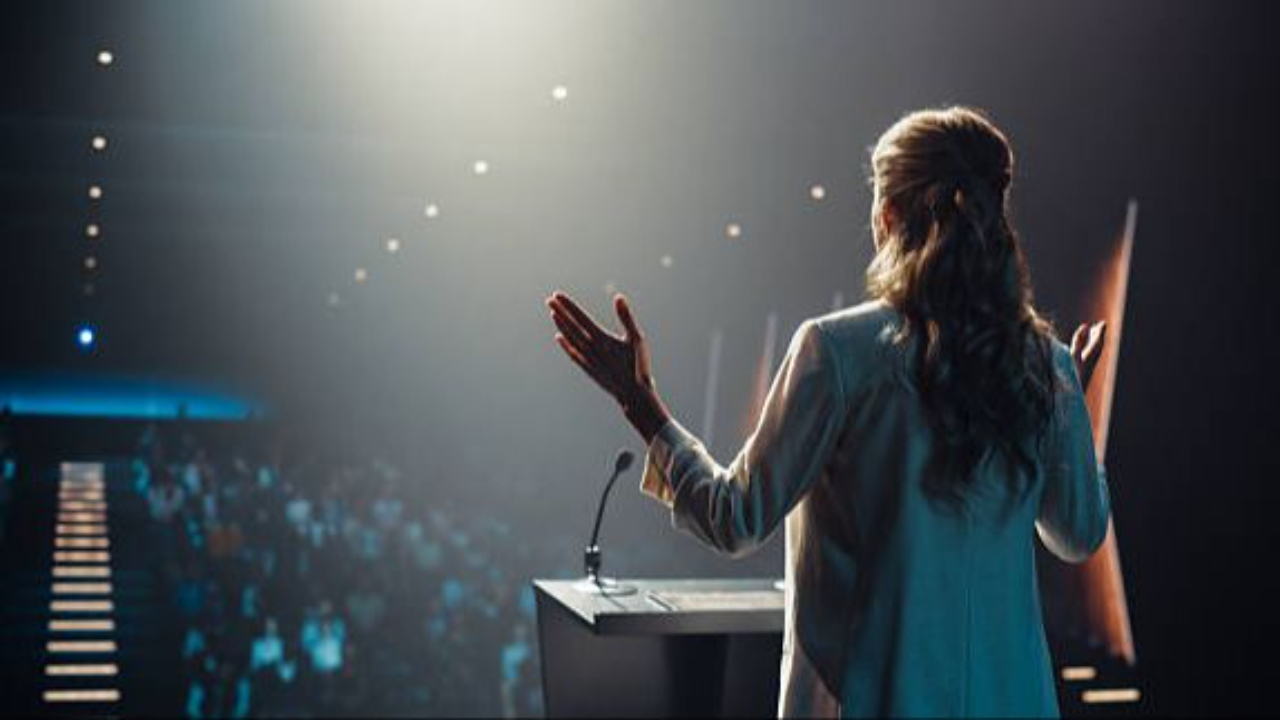
When entrepreneurs and leaders polish their communication skills in public speaking and media training, they focus on two success factors: preparation and performance. Rightly so. There’s no substitute for mastering the foundations of structure, messaging, framing, storytelling, body language, energy, voice and interaction.
But there’s a powerful moment that can fall through the gap between preparation and performance. I’m talking about the art of arriving: how to make the most of those precious seconds just before you open your mouth to begin.
We remember it from schooldays: that one teacher who could silence a riot, without words, just by standing in front of the class.
We notice it still at work: that colleague whose weight of presence is enough to hush the chatter and start the meeting.
It’s a kind of magic, when you think about it. It looks like charisma. It feels like confidence. It’s a form of influence – but it happens in a moment, and without a word.
What’s really going on, when someone owns their space so strongly? And how can we make that happen? Here are a few practical ideas that have helped my coaching clients at ISOC to nail it.
Arrive profoundly
It’s an idea borrowed from meditation and spiritual practice: before you begin, you must first arrive. Arriving means more than sleepwalking your body into the room. It means being intentionally present. That requires positive effort in the distracted flow of modern life. Try this thought experiment, and be honest: did you truly arrive in the place where you are now? How much of you is truly here, and how much of you is drifting in thought somewhere else? People notice, if only subliminally. Either way, it makes a big difference to your presence and impact.
If you’re sceptical about spiritual mumbo jumbo, then please join my club. I care about this idea because it’s pragmatic and it works. Show me a spellbinding public speaker, and I’ll show you an individual who is 100% arrived and present.
What should we do then, to arrive properly? No need to assume the lotus position in the boardroom: we can arrive privately, and quickly, in a few seconds. The key idea is noticing. Reach out with your senses into the space you’re in – fill the space with your attention. Notice the temperature, the way the light is falling, the ambient sounds, the weight of the connection between your feet and the floor.
Notice what’s not happening here: you’re not thinking. You’re not reading your notes, editing your slides, checking your phone, making small talk. You’re not hiding in distraction.
Notice the people in the room, individually, the colour of their eyes, their posture. Then reach inward with your senses and notice what’s happening inside your body. Is there tension in your chest, shoulders, throat, neck, jaw? What’s the rhythm of your breathing? Stretch, take a deep breath, and smile. You’ve arrived.
Own the silence
Time dilates when you’re in the spotlight. A couple of seconds of silence can feel like an eternity. Journalists sometimes use silence as a tactic: when an interviewee is straying toward spicy territory, they stop asking questions, knowing that people keep talking just to fill silence. That discomfort comes from the assumption, usually false, that silence makes us look uncertain. But think of those great speakers who truly own their space. Back in the day I saw Bill Clinton pause for a full 10 seconds to gather his thoughts, in mid-flow. He owned it, and what followed was genius. When you’re listening to Barack Obama or the Dalai Lama, a pause feels dignified: a marker of wisdom. There is tremendous authority in stillness, especially for thought leaders. This is what you’re channelling, when you take that moment of silence to yourself, to arrive profoundly. You are filling your tanks with authenticity to perform your best – and at the same time broadcasting your confidence.
Stand exposed
If you want to own your space as a speaker, stand in it without armour. Primal instincts surface when we’re up in front of a crowd, or a microphone, or a camera. There’s a theory from evolutionary biology that public speaking is scary because in tribal times, the most usual occasion to stand before the group was to be judged for punishment. No wonder we feel vulnerable.
Given the choice, most speakers prefer to stand behind a lectern. Given the choice, most spokespeople prefer to be interviewed sitting behind their desk. We feel exposed standing in empty space. A lectern or a desk is a shield. Even a chair gives some sense of enclosed protection.
Unless advised otherwise, most people show up for speeches or interviews holding something – notes, a pen, a phone – or if not, they pick up whatever’s in front of them. It happens subconsciously: we feel exposed with empty hands.
Everyone performs better standing up. Breathing, movement, energy and gesture all come more naturally, and with empty hands there’s nothing distracting to fiddle with. But there are also deeper reasons to drop the armour. Your choice to stand physically exposed before the tribe sends a message that resonates with them. It takes bravery, which triggers empathy. It signals authenticity, because the honest and the innocent have no reason to hide.
Back in the practical world of presentations, speeches and meetings – standing exposed is a signal that earns attention. For the proof of this, look only as far as the most successful speaking franchise of our time, the TED Talk, whose speakers stand exposed in that iconic red circle of space. The TED model generates such impact from the way it helps speakers to arrive and own their space.
There you have it. Arrive profoundly, savour the moment of silence that you take to do so, and stand exposed, channelling that vulnerability into the power of authentic connection.